
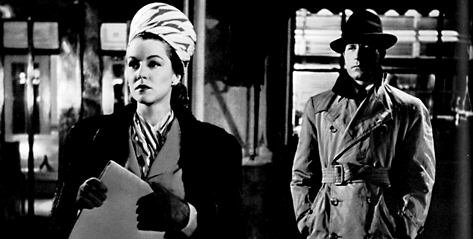

| Field | Details |
|---|---|
| Movie Name | Born to Kill (1947) |
| Director | Robert Wise |
| Writer | Eve Greene, Richard Macaulay (based on the novel “Deadlier Than the Male” by James Gunn) |
| Lead Actor | Lawrence Tierney |
| Cast | Lawrence Tierney, Claire Trevor, Walter Slezak, Phillip Terry, Audrey Long, Elisha Cook Jr. |
| Genre | Crime, Drama, Film-Noir |
| Release Date | May 16, 1947 (USA) |
| Duration | 1 hour 32 minutes |
| Budget | Approx. $800,000 |
| Language | English |
| IMDb Rating | 7.1/10 |
Film scholar Eddie Muller, who provides the commentary for this 1947 film, calls Born to Kill “one of the finest examples of true hardcore film noir.” But you couldn’t prove it by film lovers who may have watched other examples of the genre without even knowing it. Noir films, which grew out of the gangster and crime dramas of the ’30s, are typically dark in tone and subject matter, while in their underlying philosophies they’re pessimistic even existential. To reinforce this, the filmmakers relied on chiaroscuro, a technique of using shadow and light to achieve strong contrasts, and on camera angles that heightened a feeling of alienation or disjointedness.
But none of that probably mattered to those who enjoyed such noir classics as The Maltese Falcon, Double Indemnity, The Postman Always Rings Twice, The Big Sleep, or The Asphalt Jungle. What mattered more, undoubtedly, was a strong and compelling plotline, and characters that grabbed you by the throat until you lost your breath. And noir films typically feature a flawed anti hero led even further down the path of destruction by a femme fatale, who, in the end, often got hers.
Unfortunately, director Robert Wise (West Side Story, The Sound of Music) gets a bit too heavy handed with his Officer Krupke musings on what makes bad guys (and gals) tick. One character thinks aloud, “I wonder why women are so fascinated by murderers, much more so than men. Have you noticed?” Such intrusive lines put as much of a crimp on the film’s style as the muddled moments where characters’ actions seem totally unexplainable and unconvincing more subject to filmmaker’s caprice or coincidence than to any pattern of human behavior.
There are some suspenseful scenes (like faux split-screen episodes where we can weigh the severity of what’s about to happen) and dagger like twists, but ultimately B-movie journeyman Laurence Tierney and actress Claire Trevor (Stagecoach) can’t compensate for the uneven screenplay and direction.
Racy for its time because of divorce, alcoholism, promiscuity, gambling, and, of course, murder, this RKO film should be more compelling than it is. After all, it should be fascinating to watch a woman in Reno for a divorce walk in on a murder scene and not even call the police, and then get involved with the man she suspects is the killer. And it should be more unsettling that he turns up in San Francisco, where he complicates her life, and the lives of her heiress half sister (Audrey Long) and fiancé (Phillip Terry). But melodrama kills them all, in the end, rather than complementing their performances as in some of the best noir films.
The most charismatic moments actually come from veteran screen “heavy” Walter Slezak, whose performance as a private detective merited more screen time. Character actress Esther Howard is also robust, if exaggerated, as a rooming house proprietor who, with a cackling penchant for alcohol, comes across like a brothel madam. Both minor characters grab your attention the way the stars should have.
Still, Born to Kill is a good place for noir novices to begin, because Muller, author of The Art of Noir and Dark City: The Lost World of Film Noir, offers a remarkable commentary that’s both fun and informative. “Film noir is all about not calling the police,” Muller says. He talks about the nine classic stages of the noir plot and lightens up his own lecture with jokes (“These guys must have asked for the noir suite, which automatically comes with a flashing neon light outside the window.”) Like a tour guide, he points out characteristic noir scenes and also honestly assesses ones that are lacking. Inserted into the commentary are recorded audio excerpts from an elderly Wise, who, interestingly, remarks what a “rough guy” Tierney was in real life (perhaps the truth is more noirish than fiction).
To watch more movies like Born to Kill (1947) visit Fmovies.
Also watch