

| Field | Details |
|---|---|
| Movie Name | The China Syndrome (1979) |
| Director | James Bridges |
| Writers | Mike Gray, T.S. Cook, James Bridges |
| Lead Cast | Jane Fonda, Jack Lemmon, Michael Douglas |
| Supporting Cast | Scott Brady, James Hampton, Peter Donat, Wilford Brimley, Richard Herd |
| Genre | Drama, Thriller |
| Release Date | March 16, 1979 (USA) |
| Duration | 122 minutes |
| Language | English |
| Budget | ~$5.9 million |
| Box Office | ~$51.7 million (Worldwide) |
| IMDb Rating | 7.4/10 |
WATCH NOW



When The China Syndrome was originally released back in 1979, its profile got a big boost when the nuclear reactor at Three Mile Island experienced a near meltdown, just like the nuclear reactor in the movie. Suddenly, what looked to many like a sci-fi scenario seemed all too real. In the years since, of course, the nightmare scenario actually came true at the Soviet nuclear plant in Chernobyl, and on The Simpsons, meltdowns have become comic fodder with the fate of Springfield resting in the sticky hands of beer guzzling, donut addict nuke plant worker Homer Simpson (and, memorably, his muumuu-clad buttocks).
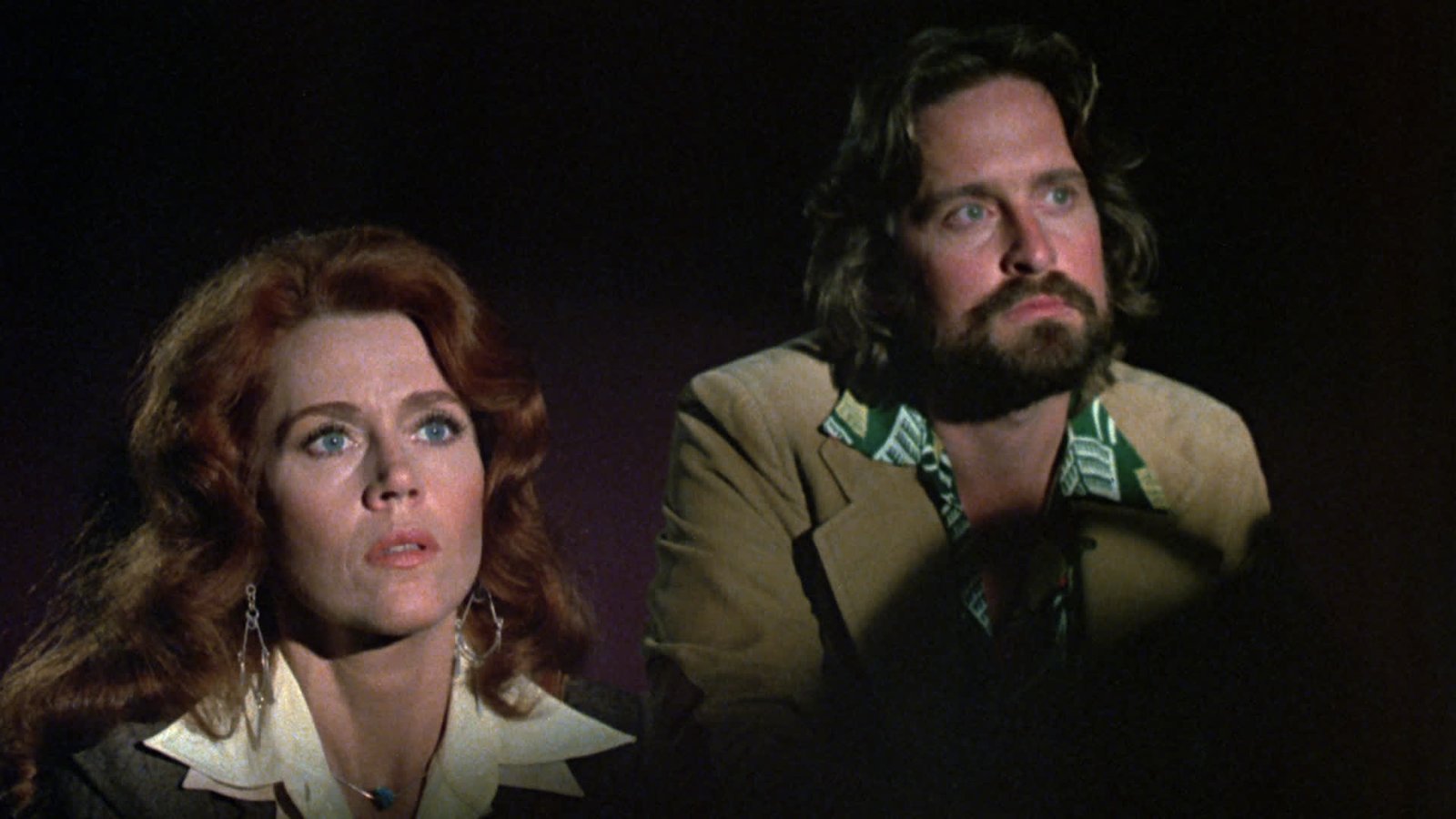
is this movie still retain the power to thrill? As a matter of fact, it mostly does, once one can get past how horribly so much of the movie has dated. Check out Jane Fonda’s larger than life hair and Michael Douglas’ hippie tresses, mountain man beard, and flairs. Not to mention the big behemoth cars gas guzzlers used to be so flat compared to our condominium on wheels SUVs of today. And the film gets off to a shaky start with the theme song that runs over the opening credits, Stephen Bishop’s “Somewhere in Between,” a banal soft rock ditty that symbolizes everything that was wrong about the polyester ’70s.
And yet, once Bishop’s obnoxious warbling ceases and the drama gets underway, The China Syndrome proves it still has the power to thrill, at least until its final act, when the suspense melts into bad melodrama and a closing speech put in the mouth of actor Wilford Brimley that fairly defines the term “heavy handed.” But that’s the end. At the beginning, there’s Fonda as Kimberly Wells, the “girl” on a happy talk L.A. news show. Her normal beat is the soft, human interest story, stuff like tiger parties at the zoo or fish veterinarians who make house calls. But she’s allowed to spread her wings a little when she’s assigned a special report on energy.
Not that the special is exactly hard news. The segment on the Ventana nuke plant, for example, starts off as little more than industry P.R. But Kimberly and her freelance crew cameraman Richard (Douglas) and soundman Hector (Daniel Valdez) just happen to be on site when alarm bells go off. As they watch (and Richard surreptitiously films), engineer Jack Godell (Jack Lemmon) and his crew in the control room go into apparent panic mode. The event only last a few minutes, but is enough for Kimberly to realize that she has stumbled onto a huge story.
At the same time that nuclear flacks are inveigling Kimberly’s bosses not to run her story, Godell is fighting his own battle with the utility, CG&E.; He is convinced that the incident was no minor hiccup and might presage a disaster if the plant is not shut down and inspected. But hearings are underway as the company seeks approval to build an identical plant farther up the coast and they are anxious that nothing derail their expansion plans. If the event was indeed a near “China Syndrome” industry slang for a meltdown as Godell suspects, then it’s time to cover up, not fix the problem.
What begins as a near parody of TV news (Kimberly’s station could serve as the basis for the recent Will Ferrell comedy, Anchorman) slowly evolves into a crackerjack thriller as the forces of the energy establishment align themselves against Kimberly’s crew and, more ominously, against Jack Godell. The China Syndrome was made a few years after whistle blowing nuclear plant worker Karen Silkwood died behind the wheel of her car and it was widely assumed that her death was no accident, but a murder to shut her up once and for all. This film is steeped in just that kind of paranoia and its best moments make for an unnerving meditation on the lengths the powerful will go to in their all consuming drive to protect their interests.
To watch more movies like The China Syndrome (1979) visit Fmovies.
Also watch